
![[background image] image of job listings (for an auto dealership)](https://cdn.prod.website-files.com/693849df550d0a6cf6e3b897/694d3cca2a4f993b0834e2e0_544e68770de71a58ca1057cc4d602ef7_features%20hero.webp)
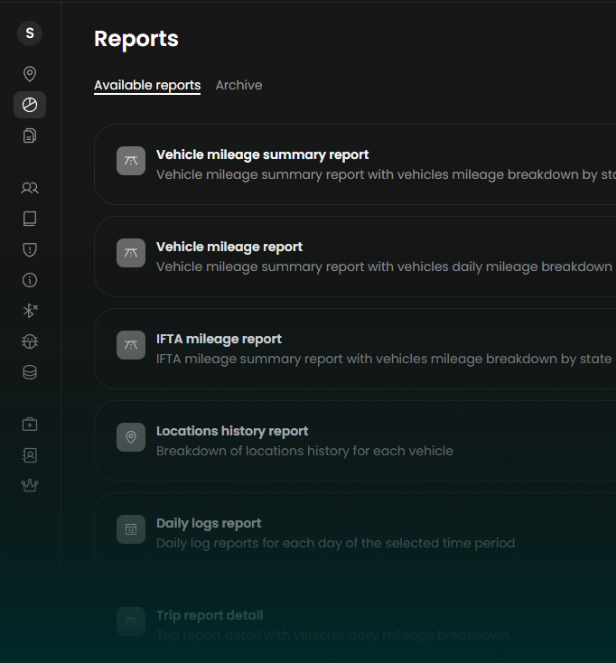
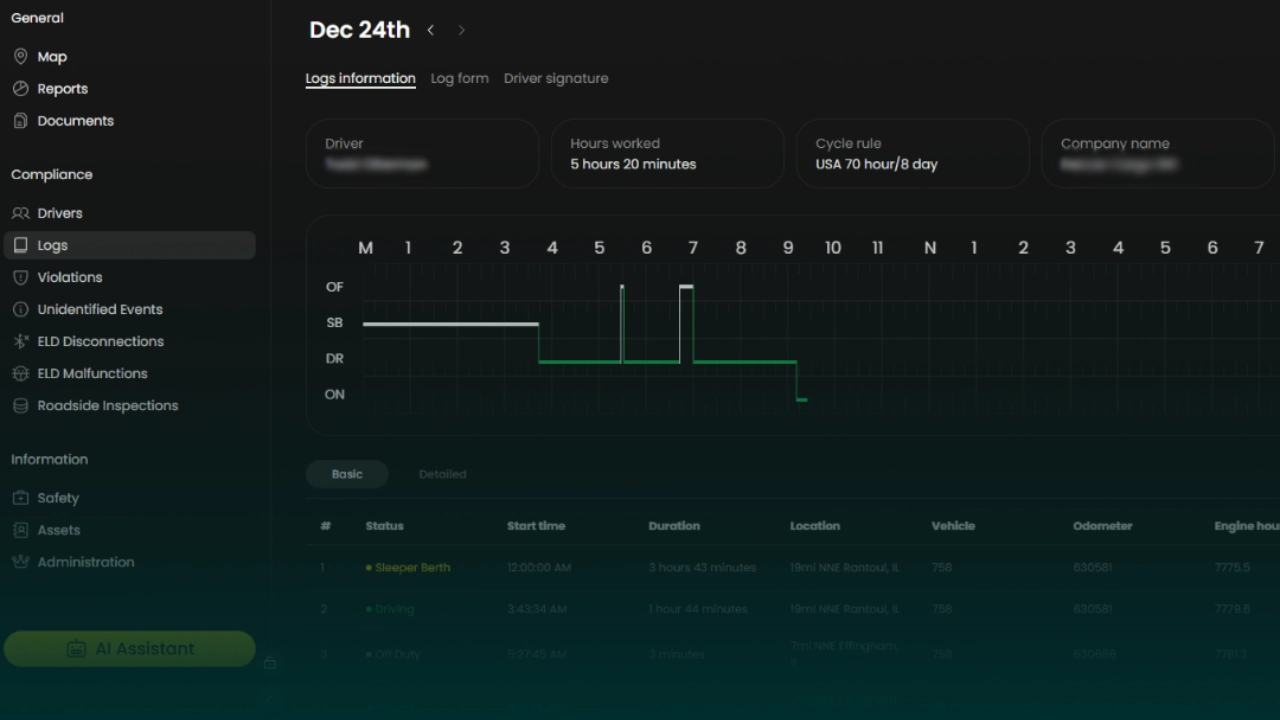
AI ELD turns your ELD logs into reports that support HOS compliance, internal safety management and IFTA reporting. Fleet managers can see violations, disconnected events and mileage data in a few clicks.
Violation reports show where and how your fleet is running into problems. You can see which drivers and trips generate HOS or ELD violations, how often these occur and whether training or policy changes are having an effect.
This allows you to address issues before they lead to fines, CSA score impacts or disrupted operations.
Disconnection and malfunction reports highlight where devices or apps are not reporting as expected. You can track how long issues last, which units are affected and whether problems are tied to particular conditions.
These reports are especially powerful when paired with monitoring, so there is accountability for identifying and resolving issues.

AI ELD uses ELD data to assemble mileage summaries that align with IFTA reporting periods. Where available, fuel information is included so you can reduce manual entry and reconciliation.
Export options help you move this data into your existing IFTA processes, reducing errors and preparation time.

The system provides exports suitable for inspections, internal audits and safety meetings. You can document how logs were handled, how violations were addressed and how the fleet’s compliance posture has changed over time.
This supports a more proactive approach to safety and regulatory obligations.
![[background image] image of job listings (for an auto dealership)](https://cdn.prod.website-files.com/693849df550d0a6cf6e3b897/694c363b68fa1584171aa0a7_solution%203.webp)