

AI ELD
Mar 6, 2026
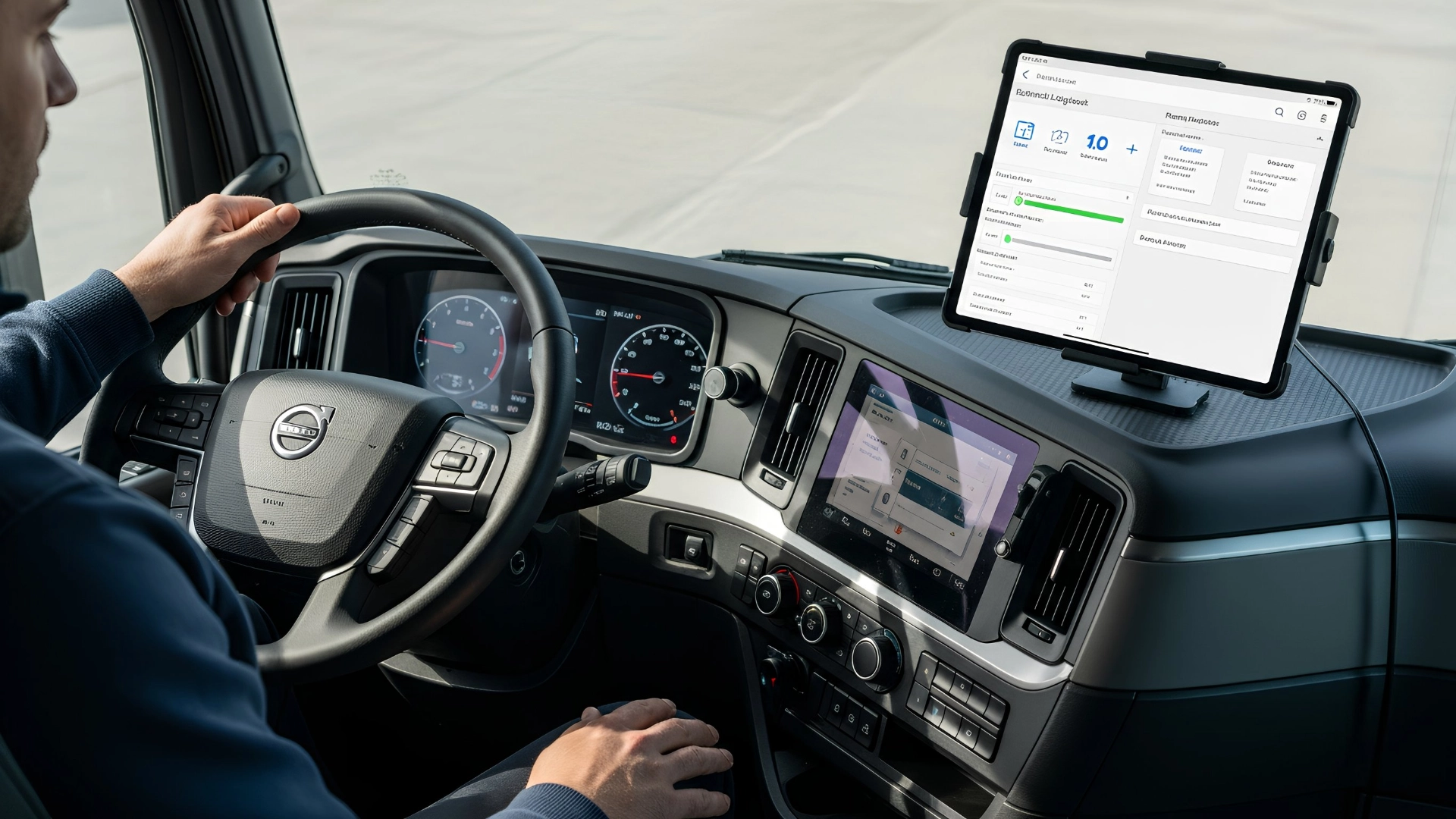
The best ELD for owner operators is not the one at the top of a ranked list, because when you run one truck the decision is yours alone. Nobody else configures the device, watches its alerts, or calls the provider when it drops out at 2 AM outside a weigh station. If you have a question about your own setup while you read, eld support answers around the clock, so you can ask before you buy instead of after.
Most "best ELD" lists name a single winner, and several of the top results are published by the company they name. BlueInk's blog puts its own BIT ELD first, Matrack's list puts Matrack first, and Lucid ELD's comparison points one-truck readers to Lucid. A company recommending its own product is fair, but it is not a neutral ranking. This list is published by AI ELD, so AI ELD comes first and everything after it is in alphabetical order. There is no overall winner. Every option is judged on the same six questions, and where it falls short for one truck, the entry says so.
To be included, an ELD had to meet three conditions. It has to be FMCSA-registered, which you should confirm yourself on FMCSA's registered list before buying, since a device that was registered last year can be revoked. It has to be used by single-truck operators in practice, shown by more than one independent source recommending it to owner-operators or small fleets. And there has to be enough information outside the provider's own marketing to describe it fairly, which is why some names that appear on other lists are not here.
Each option is then measured against the same six questions:
Details come from each provider's own pages and the third-party reviews listed at the end. Terms change, so confirm the current version in writing before you pay.
AI ELD is month-to-month with no minimum truck count, so there is no term to get stuck in. The Basic plan is $20 per vehicle per month and covers FMCSA-compliant HOS logging, the driver app, IFTA mileage tracking by state, and core compliance reporting. The Monitoring plan is $50 and adds active monitoring of compliance events, which matters if you run hours when you cannot watch your own dashboard. The difference between the two is laid out in the guide to standard versus monitored ELD service.
The plan price does not include hardware, so add the device cost when you compare it against other monthly rates. The device is a plug-in unit, most often a Pacific Track PT30, PT40, or a Geometris device (see the ELD hardware page), and installing it yourself takes about five to ten minutes. If you get stuck, support will walk you through it. Support is available around the clock, and an AI-assisted diagnostic feature helps interpret vehicle fault codes, which is useful when you are alone at a truck stop looking at a warning light.
Two honest limits for a one-truck operator. The driver app runs on your own Android or iOS phone rather than on a dedicated in-cab display, so your phone is part of the setup. And the hardware is a separate upfront purchase, not something rolled into the monthly fee.
For current plan prices, see the eld cost page, which lists both tiers.
The Garmin eLog is the no-monthly-fee option: a one-time purchase of about $250 for a Bluetooth device that pairs with a free app on your phone. It fits 9-pin J1939 and 6-pin J1708 ports, so most heavy trucks built after 2000 work, but light and medium-duty vehicles that use OBD-II do not. For a driver who stays intrastate, runs daytime hours, and has no dispatcher who needs to see the truck, it can cost less over several years than any subscription.
The tradeoffs are the ones a one-truck operator feels. There is no state-by-state IFTA mileage, records are stored only on your phone with no cloud backup, and support is limited to weekday business hours. The full three-year math against a $20 subscription is in the analysis of what a no-monthly-fee ELD really costs.
Geotab Drive is the driver app for Geotab's ELD, and it is sold through resellers rather than directly, so price and contract terms depend on which reseller you deal with. It supports a bring-your-own-device setup, and the platform's strength is deep customization and an open integration marketplace, which is built for data-heavy fleets with staff to use it. For a single truck, most of that goes unused. Get the price and the term in writing from the reseller, since they are not standardized.
Matrack is built for this segment. The device is free with a subscription, plans start at $19.95 a month, and there is no long-term contract. The basic plan covers HOS logging and DVIR, while GPS and IFTA tracking come with the Premium tier, so the number to compare is the price of the tier that includes IFTA, not the entry price. Its own site lists it as FMCSA-registered, and independent small-fleet roundups include it as well. If the lowest monthly cost is your priority and you do not need overnight monitoring, it is worth pricing out against your actual routes.
Motive is commonly described as one of the most widely used ELDs in trucking, and reviewers often praise its driver app, an optional AI dashcam, and IFTA reporting. Pricing is usually quoted rather than posted, and third-party estimates run roughly $25 to $45 a month. Contract terms are the part to pin down. Some reviews report month-to-month terms on the base ELD plan, while others list annual or order-form terms, so sources disagree. Ask for the term in writing before you install anything.
Samsara is a full platform with ELD compliance alongside GPS, optional dashcams, and maintenance tools. For a driver who dislikes depending on a phone, the dedicated in-cab device is a real advantage, and IFTA tracking is built in. The obstacle for one truck is the contract. Pricing is quoted rather than posted, and reviewers report multi-year terms, with one comparison citing a 36-month minimum and the remaining balance due on early exit. That is a fair structure for a fleet outfitting fifty trucks and a heavy commitment for one. Geotab, Motive, and Samsara are compared side by side on contract terms and compliance record in the Samsara, Motive, and Geotab comparison.
Whichever you choose, five checks take about ten minutes. Confirm the exact device and its identifier on FMCSA's registered list, and check it against the revoked list too. Ask for the total first-year cost, meaning hardware plus twelve months of fees. Ask what happens if you cancel in month three. Call the support number after dark and see whether anyone answers. And if you are leased on to a carrier, ask the carrier which ELD it requires before you buy anything.
If you have just received your authority, the order of setup steps is in the guide for new authority owner-operators.
FMCSA ELD Program. "Registered ELDs" and "News and Events." Primary source for the registered and revoked device lists, the self-certification model, and the instruction to verify a device by name and ELD identifier before buying.https://eld.fmcsa.dot.gov/Listhttps://eld.fmcsa.dot.gov/support/newsandevents
Boomset. "7 ELD Devices for Small Trucking Fleets." Independent source for Matrack's free-device, from-$19.95, month-to-month structure and its Premium tier for GPS and IFTA; for Geotab Drive's reseller pricing, reseller terms, and bring-your-own-device option; for Motive and Samsara order-form terms and quote-based pricing; and for the Garmin eLog's J1939 and J1708 connections.https://boomset.com/eld-devices-for-small-trucking-fleets/
Oxmaint. "Choosing Between Samsara, Geotab, and Motive." Source for Samsara's 36-month lock-in for small and mid-size carriers, month-to-month terms on Motive's base ELD plans, and Geotab's open API and marketplace.https://oxmaint.com/industries/fleet-management/samsara-geotab-motive-telematics-comparison-fleet-2026
American Truckers LLC. "Best ELD for Owner-Operators 2026: 6 Devices Ranked." Source for Samsara's dedicated hardware, built-in IFTA tracking, and estimated $33 to $45 monthly price.https://www.americantruckersllc.com/blog/best-eld-owner-operators-2026.html
OTrucking. "Best ELD Devices for Owner Operators 2026." Source for Motive's estimated $25 to $45 monthly price, its driver app, optional AI dashcam, and IFTA reporting.https://otrucking.com/resources/best/eld-devices/
SmallFleetHQ. "FMCSA ELD List for Truckers: Registered and Revoked Devices (2026)." Source for the Garmin eLog's registered status as of September 26, 2026 and the fact that registered devices are self-certified rather than endorsed by FMCSA.https://smallfleethq.com/elds/fmcsa-list
Matrack Inc. "Matrack ELD" and "9 Best ELD Devices for Trucks in 2026." Source for Matrack's FMCSA registration listing (a provider-published claim) and an example of a vendor-published list that names its own product first.https://matrackinc.com/products/matrack-eld/https://matrackinc.com/best-eld-devices/
BlueInk Technologies. "Best ELDs for Owner Operators In 2026." Example of a vendor-published list that names its own product, BIT ELD, as the best overall choice.https://blog.blueinktech.com/blog/best-elds-for-owner-operators-in-2026
Lucid ELD. "Lucid ELD vs Samsara vs Motive: 2026 Comparison." Example of a vendor-published comparison that recommends the vendor's own product to owner-operators.https://lucideld.com/news/lucid-vs-samsara-vs-motive
AI ELD. "ELD Contract Red Flags." Source for AI ELD's per-vehicle, month-to-month billing with no minimum truck count.https://ai-eld.com/insights/eld-contract-red-flags
AI ELD. "Samsara, Motive, Geotab, and Verizon Connect: An ELD Comparison Built Around HOS Compliance." Source for the Basic plan's included features and for contract terms across the large platforms.https://ai-eld.com/insights/eld-comparison-samsara-motive-geotab-verizon
AI ELD. "ELD System for Trucks." Source for the AI-assisted fault code diagnostic feature and state-by-state mileage reporting.https://ai-eld.com/insights/eld-system-for-trucks
AI ELD. "ELD With No Monthly Fee: The True Three-Year Cost." Source for the Garmin eLog's price, port support, phone-only storage, missing IFTA tracking, and support hours.https://ai-eld.com/insights/eld-no-monthly-fee-true-cost
There is no single answer, which is why this list does not rank one. The right choice depends on whether you cross state lines often enough that IFTA automation matters, whether you can walk away from a contract, and whether you want a phone-based app or a dedicated device.
Subscription plans for one truck generally run about $20 to $45 per month. Matrack starts at $19.95, AI ELD Basic is $20, and third-party estimates for Motive and Samsara run $25 to $45. Hardware is sometimes included and sometimes separate, and the Garmin eLog costs about $250 once with no monthly fee, so compare the first-year total, not the monthly rate alone.
Not always. Drivers who qualify for the short-haul exemption can use timecards instead, but the exemption is checked day by day and the 8-in-30 rule can end it. Read the ELD exemption rules before you decide you can skip one.
That depends on your lease. Many carriers require leased drivers to use the carrier's own system, so ask before you buy anything.
With month-to-month terms, switching costs you a month, not a contract. The steps for moving your records and hardware without a compliance gap are in the guide to switching ELD providers.