

AI ELD
Feb 11, 2026
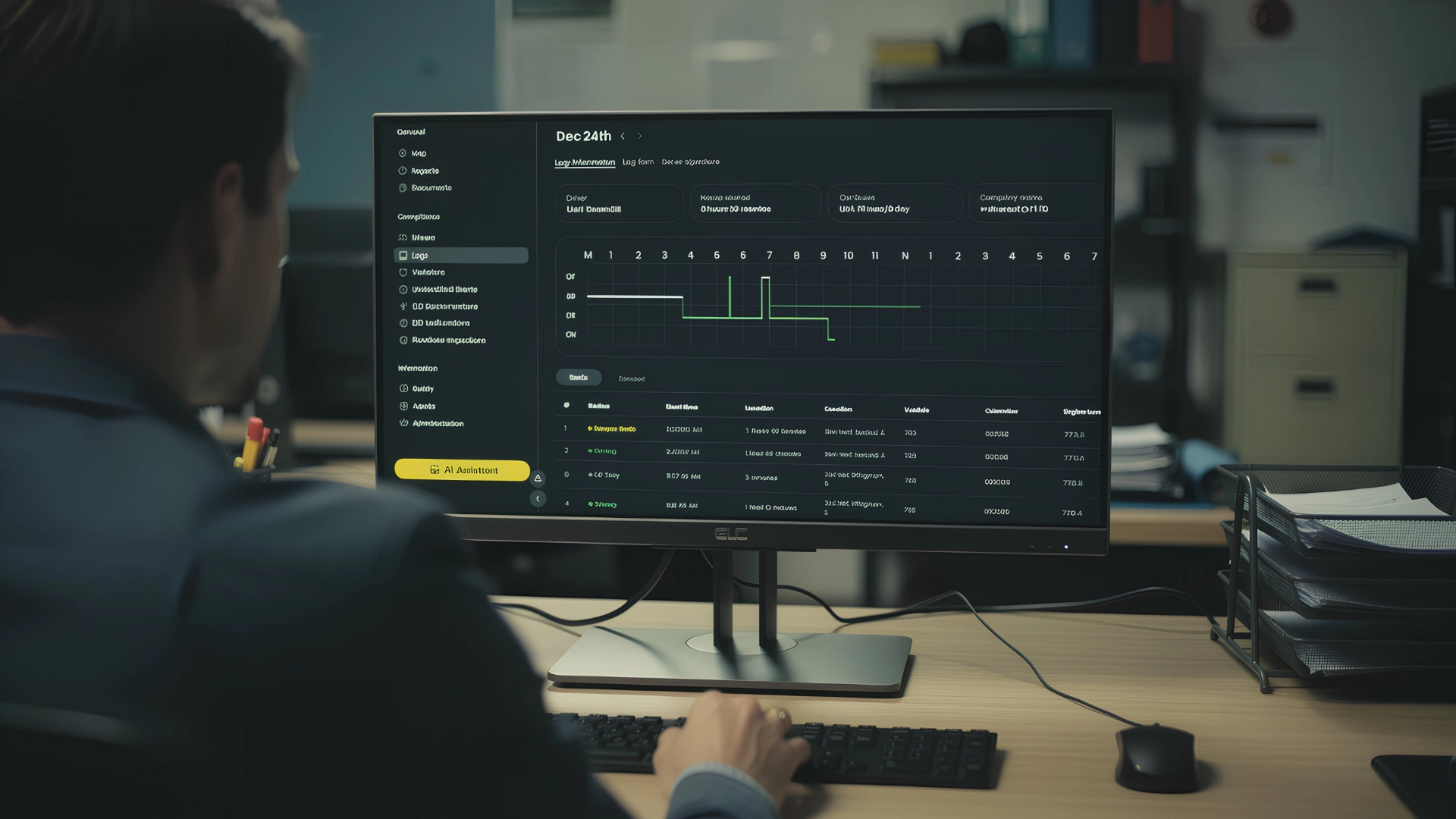
Almost every comparison of ELD options gets the variable wrong. It frames the decision as a question about the device: better hardware, more features, a nicer app, deeper integrations. For the monitoring decision specifically, that framing is misleading, because the device is not what changes. A standard ELD and a monitored ELD can be the exact same compliant hardware running the exact same dashboard. What changes is whether a human being is watching the compliance events that device generates, and acting on them, during the hours your own office is closed. That is the entire decision, and getting it framed correctly is the difference between paying for something you do not need and skipping something that would have prevented a five-figure violation. If you want to talk through which fits your operation, eld support can walk through it directly, but the framing below is what actually matters.
A compliant ELD records everything correctly on its own. It captures duty status, flags an approaching hours limit, logs a device disconnect, records an unassigned driving event. The recording is automatic and it happens whether or not anyone is paying attention. The question monitoring answers is what happens in the gap between the event being recorded and a human doing something about it.
A standard ELD, the self-managed setup that most fleets run, does exactly what the mandate requires. It records hours of service accurately, produces logs that hold up at a roadside inspection, and surfaces compliance events on a dashboard that you or your dispatcher or your safety coordinator can review. The device does its job completely. The part that is left to you is watching what it produces and acting when something needs action.
For a fleet with a staffed office during operating hours, this is often enough. A dispatcher who can see each driver's remaining hours before assigning a load, a coordinator who reviews the violation and unassigned driving reports each morning, and a driver who responds to the app's own in-cab alerts together cover most of the compliance surface. The self-managed model works when there is reliably a person positioned to see an event and respond to it within a useful window. The ELD compliance dashboard alerts guide covers how to configure those alerts so the right event reaches the right person, and for a well-staffed daytime operation, correct alert configuration is a large part of what makes self-management viable.
The self-managed model has one structural weakness, and it is not a device weakness. It is a coverage weakness. The device keeps recording around the clock. The office does not stay open around the clock. Every hour the office is closed is an hour where events are recorded and nobody is watching them.
The Monitoring tier does not give you a more capable ELD. It gives you people. A monitoring service is a team watching the same events the standard device already generates, positioned to act on them during the hours your office cannot: overnight, weekends, holidays, and any stretch where no one on your side is looking at the dashboard.
Concretely, the AI ELD Monitoring plan adds a team watching for the specific events that turn into violations, disconnected devices, approaching HOS limits, and unassigned driving events, across every vehicle, with the job of catching them and prompting a response before they harden into an inspection finding or a falsification pattern. The device was always going to record the 2 AM disconnect. The difference monitoring makes is that at 2 AM, someone sees it. This is the same distinction whether you run five trucks or eighty, which is why the monitoring option appears across operations of every size rather than only at enterprise scale.
If your operation runs any significant volume outside standard office hours, this is the gap worth pricing out directly. You can see exactly what the Basic self-managed tier includes versus what the Monitoring tier adds, and the honest per-truck difference between them, on the eld price page. The comparison is worth looking at with your own operating hours in mind, because the value of monitoring is almost entirely a function of how many of your compliance-exposed hours fall outside the window your office actually covers.
Strip away the marketing on both sides and the monitoring decision reduces to a single question. When a compliance event fires at a time your office is closed, who sees it, and how fast can they act?
This matters because compliance events are not evenly distributed across the parts of the day you are watching. A meaningful share of them happen overnight, and overnight is also where a small problem does the most damage before anyone catches it, for reasons rooted in both the HOS rules and simple coverage timing. The full explanation of why the overnight window is structurally the most dangerous, and why the carrier bears the consequence regardless of what the driver did, is covered in depth in the analysis of the 3 AM problem in ELD compliance. The point relevant to the monitoring decision is narrower: a standard ELD records the overnight event perfectly and then waits for morning, when your coordinator arrives to find a disconnect that ran for six hours or an unassigned driving segment that now needs reconstructing after the fact. Monitoring compresses that gap from hours to minutes because someone is watching in real time.
The carrier's obligation, worth stating plainly, does not pause when the office closes. Under the HOS rules, the carrier is independently responsible for not permitting a driver to operate outside the limits, which means the responsibility to catch a developing problem exists at 3 AM exactly as it does at 3 PM. A standard ELD satisfies the recording obligation around the clock. Only a person, yours or a monitoring team's, satisfies the watching obligation around the clock.
Monitoring is not the correct answer for every fleet, and it is worth being direct about that rather than pushing it universally. There are operations where the self-managed standard tier is genuinely sufficient, and paying for monitoring would be paying for coverage you do not need.
If your trucks run daytime routes and are parked overnight, if your office is reliably staffed during the hours your drivers are actually operating, and if one person can realistically see every driver's status a few times a shift, then the standard ELD with well-configured alerts covers your exposure. A small local fleet running predictable daytime routes with a dispatcher who watches the board is exactly the operation self-management was built for. In that situation the compliance events happen while someone is already watching, and adding a monitoring team pays for a gap that does not exist in your operation.
The calculus shifts when the operating pattern stops matching the office pattern. Overnight and early-morning operations, weekend running, team drivers covering continuous miles, expedited freight completing at 2 AM, or simply a back office too thin to reliably watch the dashboard every day, these are the conditions where the coverage gap is real and where the self-managed model quietly leaves hours uncovered. If you want to see how the monitoring coverage would map against your specific operating hours before deciding, start a free 14-day trial of AI ELD and run it against your actual schedule rather than a hypothetical one.
This is the part most comparisons get wrong, and it is worth being explicit. Choosing the standard tier does not mean choosing a worse device, a less compliant logbook, or a dashboard missing features. With AI ELD, the Basic self-managed plan and the Monitoring plan run the same FMCSA-compliant hardware, the same driver app, the same compliance dashboard, and the same reporting tools. A fleet on the standard tier is not carrying a second-rate ELD. It is carrying the full device and doing the watching itself.
That reframing matters for the decision, because it removes the false worry that self-managing means cutting a compliance corner. It does not. The recording, the roadside inspection readiness, the log accuracy, and the audit-ready reports are identical on both tiers. The only thing you are deciding is whether to add a human coverage layer on top of a device that is already fully compliant on its own. You are not choosing between a good ELD and a better one. You are choosing between watching the events yourself and having a team watch them with you.
The right way to price monitoring is not the subscription against zero. It is the subscription against the realistic cost of the events it exists to catch. A single serious ELD or HOS violation, once out-of-service downtime, lost revenue, insurance impact, and CSA damage are added together, runs well into five figures, and the full breakdown of that true cost is laid out in the guide on ELD violations and fines. Against that number, the monitoring question becomes concrete: across a year, how many uncovered hours does your operation actually have, and what is the probability that one serious event lands in one of them.
For a fleet whose exposure hours are mostly covered by a staffed office, that probability is low and the standard tier is the rational choice. For a fleet running heavy overnight or weekend volume with a thin back office, the probability is high enough that a single prevented violation can cover the monitoring cost for the entire fleet for a year. The decision is not ideological. It is a straightforward mapping of your uncovered hours against the cost of the events that tend to land in them.
If you want the plain side-by-side of what each tier includes and what the per-truck difference is, the eld price page has it laid out. Look at it with your own operating hours in front of you, because that context, not the feature list, is what makes the decision clear.
FMCSA. "Electronic Logging Devices." Primary regulatory source for the ELD recording requirements that both the standard and monitored configurations satisfy, including the automatic capture of duty status, driving time, and location data. https://www.fmcsa.dot.gov/hours-service/elds/electronic-logging-devices
eCFR. "49 CFR 395.3: Maximum Driving Time for Property-Carrying Vehicles." Primary regulatory source for the carrier's independent obligation not to permit or require a driver to operate outside the hours-of-service limits, which applies continuously regardless of office hours. https://www.ecfr.gov/current/title-49/subtitle-B/chapter-III/subchapter-B/part-395
Dashdoc. "ELD Compliance Software for Trucking Carriers in 2026." July 2026. Source for the confirmation that standalone ELD devices satisfy the letter of the mandate by recording hours and producing reports, but do not proactively manage compliance risk, and that manual monitoring does not scale as fleet size grows. https://www.dashdoc.com/en-US/blog/eld-compliance-software-guide
US Tech Automations. "7 Best ELD Software Picks for Trucking Companies in 2026." July 2026. Source for the operational threshold framing: when a single dispatcher can realistically watch every driver's hours-remaining screen a few times a shift, built-in alerts are sufficient, and the added coverage layer earns its cost once fleet size or operating pattern makes manual watching miss events before they happen. https://ustechautomations.com/resources/blog/automate-best-eld-software-for-trucking-companies-2026
FleetRabbit. "ELD Compliance: What Transportation Fleets Must Know in 2026." May 2026. Source for the distinction between real-time HOS visibility that surfaces events and automated systems that alert before violations occur rather than detecting them after the fact. https://fleetrabbit.com/industry/transportation-and-logistics/eld-compliance-transportation-fleets-2026
AI ELD. "The 3 AM Problem: Why ELD Issues Do Their Worst Damage Overnight." Source for the structural explanation of why the overnight window concentrates compliance risk and why the carrier bears the consequence regardless of driver awareness. https://ai-eld.com/insights/the-3am-problem-eld-violations
AI ELD. "How to Configure Your ELD Compliance Dashboard Alerts." Source for the alert configuration mechanics that make the self-managed standard tier viable for a staffed daytime operation. https://ai-eld.com/insights/eld-compliance-dashboard-alerts
AI ELD. "ELD Violations and Fines: What a Single Incident Actually Costs a Fleet." Source for the true total cost of a single serious violation, the number against which the monitoring subscription should be weighed. https://ai-eld.com/insights/eld-violations-fines